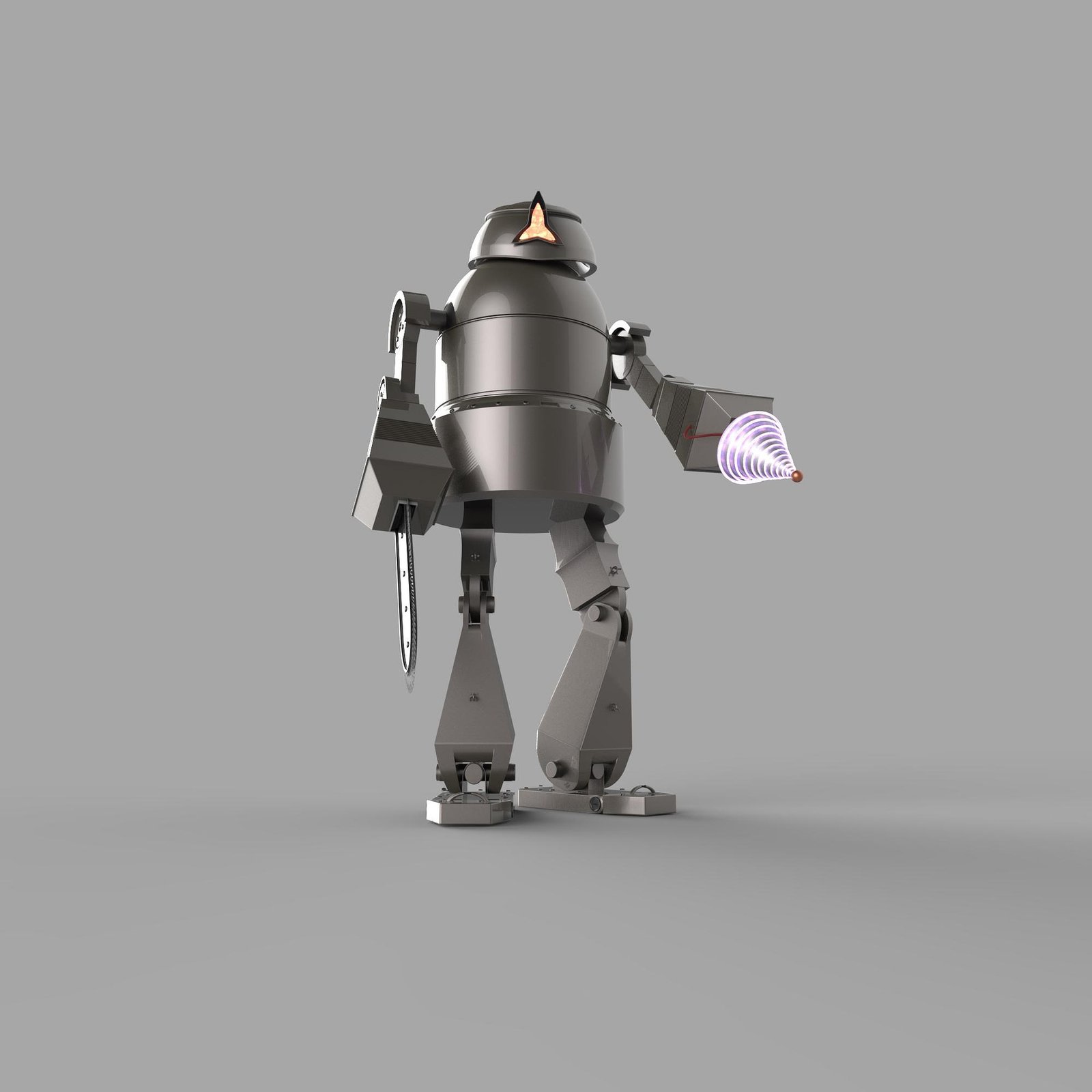
Which Technology Is Used in Robotics? A Complete Guide to Modern Robotics Technologies
Robotics is, like really, one of the fastest growing areas in modern tech, and it is kinda reshaping whole industries, manufacturing and healthcare, plus agriculture, logistics, and even space exploration. What’s changed lately is that today’s robots aren’t only stuck doing the same old repetitive job inside factories. With quick jumps in artificial intelligence (AI), sensors, computer vision, and connectivity, robots can now sort of learn on the go, adjust their behavior, work alongside humans, and also make smarter decisions in real time, without someone constantly micromanaging everything.
So this piece looks at the main technologies used in robotics, how they fit together in practice, and why they’re nudging automation toward what comes next.
## What Is Robotics?
Robotics is kinda a slice of engineering and computer science, it’s the field that’s dealing with designing, building, programming, and operating robots. A robot is basically a machine that can do tasks automatically or semi-automatically, with only little human involvement, more or less.
A bunch of today’s robots blend hardware with software, so they can sense what’s around them, process the gathered information, choose the next step, and then perform those steps physically in a careful ,precise way.
## Core Technologies Used in Robotics
### 1. Artificial Intelligence (AI)
Artificial Intelligence is sort of the “brain” behind most today’s robots, and to be fair it acts like the guiding layer as well. It lets robots sort through incoming data, spot recurring patterns , and learn from prior situations so they can answer in a more adaptive fashion without having to be constantly managed, or watched by people 24/7.
**Where AI shows up in robotics**
Autonomous navigation
Facial recognition
Voice interaction
Predictive maintenance
Object detection
Human-robot collaboration
Medical diagnosis assistance
Like in warehouses , robots can recognize those parcels, work out the fastest routing for delivery , then also dodge obstacles with AI approaches that move quickly and respond in real time.
**Benefits**
Quicker decisions
Higher efficiency
Ongoing learning
More automation
### 2. Machine Learning
Machine Learning is a part of AI that lets robots get better using data, rather than depending only on rigid, fixed programming.
Instead of doing the exact same steps every single time, machine learning allows robots to notice new circumstances, and adapt.
**Typical uses**
Quality inspection
Speech recognition
Predictive analytics
Industrial automation
Customer service robots
Like, a robotic arm inside a manufacturing plant can slowly learn to spot product defects, and little by little the accuracy gets better. At first it might be kind of awkward, then after more feedback it gets used to the signs, so the results become more reliable, even if it takes a while.
### 3. Computer Vision
Computer vision gives robots the ability to “see” and interpret their surroundings using cameras along with image-processing software.
It’s not only about taking pictures. Computer vision interprets visual details in a way that’s sort of similar to how the human brain works.
**Main functions**
Object recognition
Barcode scanning
Facial identification
Motion tracking
Defect inspection
Autonomous navigation
Computer vision is honestly pretty necessary for autonomous vehicles, warehouse systems, surgical robots and even inspection setups. It kind of becomes the backbone, because without that visual perception things fall apart, like sensors but you know, understanding what’s in front of it.
### 4. Sensors
Sensors are the sensory tools of robots. They gather information from the environment, so the robot has input to work with.
A robot might use different sensor types depending on its job.
**Common sensor types**
**Proximity Sensors**
Detect nearby objects, without touching them.
**Temperature Sensors**
Track heat levels during industrial processes.
**Pressure Sensors**
Measure force, including hydraulic pressure.
**Touch Sensors**
Help robots detect physical contact.
**Infrared Sensors**
Often used for obstacle detection and navigation.
**Ultrasonic Sensors**
Measure distance through sound waves.
**LiDAR Sensors**
Create detailed 3D maps, used for accurate autonomous navigation.
**Benefits**
Improved safety
Better accuracy
Stronger navigation
More awareness of the environment
### 5. Actuators
While sensors gather information , actuators turn those commands into real physical motion. Like, in a sense, they work almost like muscles inside a human body, kind of doing the heavy lifting from signals.
**Types of actuators**
Electric motors
Hydraulic actuators
Pneumatic actuators
Servo motors
Linear actuators
Actuators let robots:
Lift objects
Rotate joints
Walk
Grip tools
Assemble products
### 6. Robotic Control Systems
The control system is basically the robot’s central nervous system. It coordinates incoming data from sensors, processes it, and then tells actuators what to do next.
Most modern robotic controllers include things like:
Embedded processors
Microcontrollers
Industrial PLCs
Real-time operating systems
With advanced control systems, robots can execute tasks more smoothly, more safely, and with better precision.
7. Internet of Things (IoT)
IoT is kind of what enables robots to stay tied in with other machines, sensors, cloud platforms, and even business or enterprise software, over the internet. In everyday life, it can feel like there’s this never ending “conversation” running in the background, constantly, with no real pause, or break. Once the robots get linked up they can swap data in real time, so they dont just sit there waiting on fresh info… like forever, or whatever.
Applications
Predictive maintenance
Fleet management
Remote monitoring
Industrial automation
With IoT enabled robots, they can catch equipment problems early, before tiny glitches turn into full on failures, and then trigger those annoying production delays in advance.
8. Cloud Computing
Cloud computing seriously boosts a robot’s computing power, almost like giving it extra brain space. Rather than keeping every bit of data on the robot itself, robots can process huge datasets on cloud servers where resources are bigger.
Advantages
Real-time updates
Remote management
Data sharing
Continuous learning
AI model deployment
Cloud robotics also means thousands of robots can learn from shared experiences, so improvements can spread faster than in isolated setups.
9. Edge Computing
Cloud tech is great, but some robotic tasks need a response right now, not “later, maybe.” Edge computing handles data directly on the robot or a nearby edge device instead of forwarding everything to far away cloud servers.
Benefits
Lower latency
Faster decision-making
Improved reliability
Enhanced privacy
Reduced bandwidth usage
Edge computing is especially important for self-driving vehicles, drones, and industrial robots, where timing matters a lot.
10. Robot Operating System ( ROS )
Robot Operating System (ROS) is one of the most used software frameworks in robotics, and it is widely adopted across many labs as well as in different industries. It basically gives developers a bunch of ready to use tools, so you can craft robot applications without having to begin from scratch over and over, again.
Features
Hardware integration
Motion planning
Sensor management
Simulation
AI integration
ROS helps speed up robot development, because it ships with pre -built software libraries and convenient development tools. it feels almost like an ecosystem you can plug into, you know. Instead of constantly starting fresh, you already get several blocks in place, then you just extend them gradually, kind of. it also makes the system feel more like a connected network rather than a one off program, and that’s kinda the point.
11. Autonomous Navigation Technology
A lot of modern robots can work without constant human direction. Autonomous navigation mixes several technologies, such as:
GPS
LiDAR
Cameras
AI
Computer vision
Mapping algorithms
Together, these systems allow robots to:
Avoid obstacles
Plan routes
Navigate dynamic environments
Deliver goods
Explore hazardous locations
You’ll see autonomous navigation in drones, delivery robots, and self-driving vehicles most days.
12. Human Robot Collaboration (Cobots)
Collaborative robots , also known as cobots, are made to work safely beside people, not to kick them out in a full on manner. Unlike the usual industrial robots, cobots bring in extra safety features like , things such as:
Force sensors
Collision detection
AI monitoring
Speed control
Cobots show up a lot in electronics manufacturing, in automotive assembly, in packaging, and even in healthcare, where safety matters but also flexibility, kind of more.Industries Using Robotics Technology
Robotics is changing nearly every big industry, with new workflows showing up all the time.
Manufacturing
Welding
Painting
Assembly
Packaging
Quality inspection
Healthcare
Robotic surgery
Rehabilitation
Pharmacy automation
Hospital logistics
Patient assistance
Agriculture
Crop monitoring
Precision spraying
Harvesting
Weed detection
Soil analysis
Logistics
Warehouse automation
Package sorting
Inventory management
Autonomous delivery
Construction
Bricklaying
Concrete printing
Site inspection
Heavy lifting
Space Exploration
Planetary rovers
Satellite servicing
Space station maintenance
Benefits of Modern Robotics Technology
Organizations worldwide keep investing in robotics, because it brings noticeable advantages. Some of the biggest perks include :
Higher productivity
Improved precision
Enhanced workplace safety
Reduced labor costs
24/7 operation
Better product quality
Faster production
Lower human error
Increased operational efficiency
Greater scalability
Future Trends in Robotics
The future of robotics looks more intelligent and more interconnected. A set of emerging technologies is expected to reshape robotic abilities over the next decade, and yes that includes things outside the typical industrial workflow.
Key trends include:
AI-powered autonomous robots
Humanoid robots
Swarm robotics
Soft robotics
Digital twins
5G-enabled robotics
Advanced computer vision
Quantum-enhanced optimization
Sustainable robotic systems
Healthcare and eldercare robots
These new ideas will let robots manage harder tasks, while still working safely and efficiently alongside humans, rather than in a separate world.
Conclusion
Robotics is kind of pushed forward by a mix of advanced technologies such as artificial intelligence, machine learning, computer vision sensors, actuators, IoT, cloud computing, edge computing, autonomous navigation, and advanced control systems. When these parts work together, robots can notice what’s around them, sort through information, make sharper decisions, and then perform those accurate physical movements.
And as AI and automation keep getting better, robots will likely become more intelligent, more adaptable, and more cooperative across industries. Like from manufacturing, healthcare, to agriculture and even space exploration, robotics is starting a different, new kind of innovation wave. It boosts productivity, supports steadier safety, and it also helps tackle difficult problems you actually face in real life. Companies that take robotic technologies seriously right now will probably be set up to compete in a more automated tomorrow, sooner than later.
Frequently Asked Questions (FAQs)
1. What technology is mostly used in robotics?
Robotics usually ends up depending on many bits together, like Artificial Intelligence (AI) , Machine Learning, Computer Vision, sensors, actuators, Internet of Things (IoT), Cloud Computing, Edge Computing, and Robot Operating System (ROS). Basically, that whole bundle helps a robot sense the world, interpret it, and coordinate with what’s around, not just in theory, but also pretty much in real time, or close to it.
2. Why is Artificial Intelligence so important in robotics?
Artificial Intelligence gives robots the ability to make decisions, recognize objects, absorb structure from data, correct mistakes, and complete tasks by themselves. When AI is in the mix, robots get more capable, more responsive to change, and they deal with real life, messy situations better, even if things don’t repeat the same way twice.
3. What do sensors actually do in robotics?
Sensors help a robot gather the finer details about its surroundings, or at least the pieces it can’t “see” very clearly. They can measure distance, temperature, pressure, light, touch, and even motion. So the robot can move in a safer style, and operate with more precision … like adding extra senses, you know.
4. What is the future of robotics?
The future of robotics looks like it’s moving toward more AI driven autonomous machines, humanoid robots, collaborative robots—sometimes called cobots , swarm robotics, soft robotics, and 5G connected setups. Overall, these directions should make robots more skillful, more flexible, and generally more dependable when they’re operating near people.