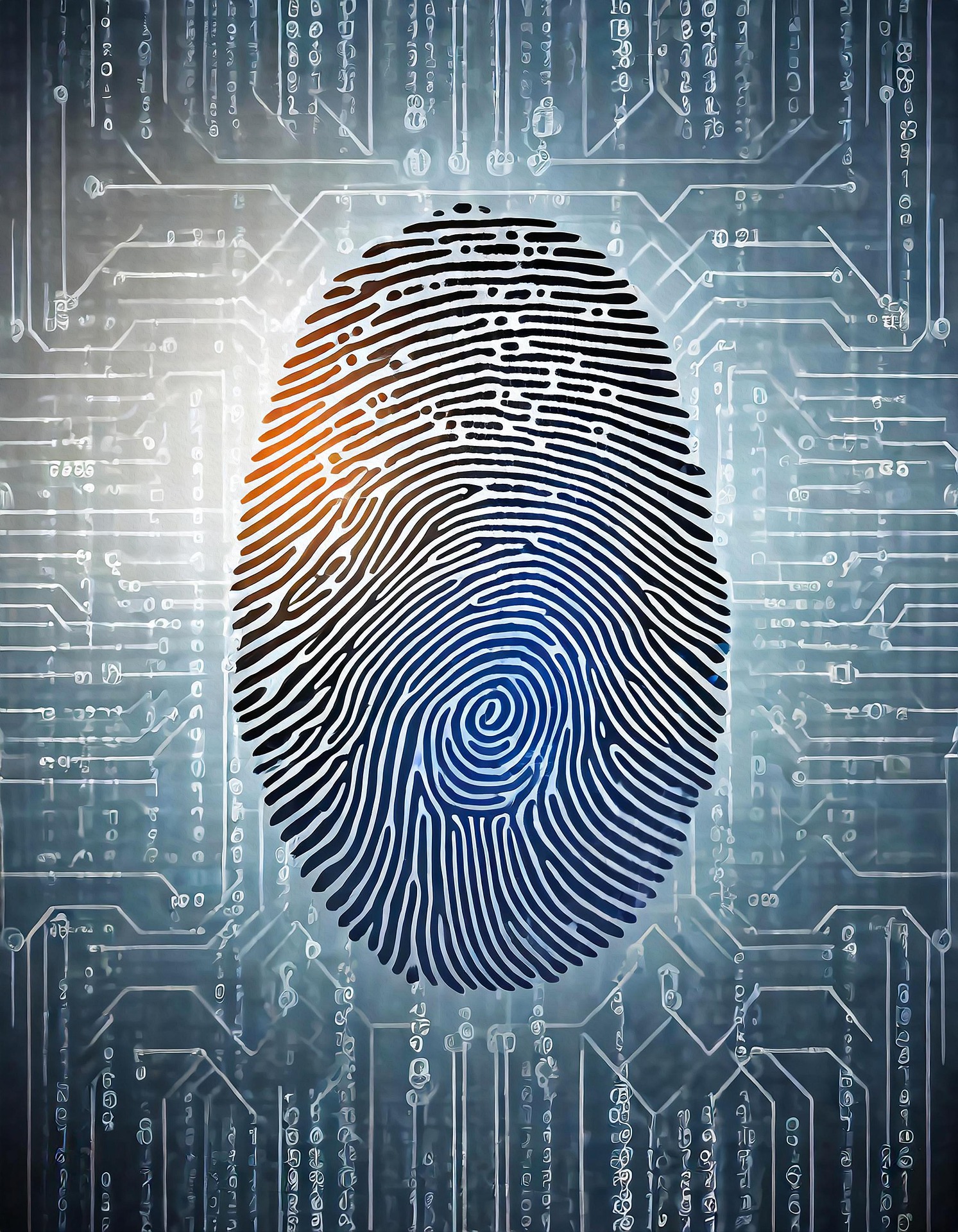
Artificial Intelligence is used in biometric security systems.
Artificial Intelligence has changed a lot in terms of security and data protection for people and organizations. Because of this a lot is now possible. One of those things is the use of Artificial Intelligence in biometric security systems. Biometric security systems are built to confirm or identify people with traits like finger prints, eye patterns, facial characteristics, speech recognition and even behavioral patterns. Artificial Intelligence gives these systems a higher speed, smarter responses and more accuracy.
Now basic passcodes and PINs do not cut it anymore. Cyber criminals are coming up with more ways to steal data or enter locked locations without permission. This is where Artificial Intelligence fits in because it relies on traits that're extremely hard to mimic and also very difficult to steal, copy or reproduce. We can see Artificial Intelligence being used in smartphones, internet banking, airport security gates and other organizations that need levels of security.
In this article we will dig into the use of Artificial Intelligence in biometric security systems. Their main intentions, advantages, challenges and where things might go next.
Biometric security systems: what are they?
A biometric security system is basically a security method that recognizes and/or verifies someone’s identity using traits. Instead of relying on something you have or something you know like a password the system uses something you're. The common biometric traits include:
* Fingerprints
* Faces
* Irises
* Voiceprints
* Palm veins
The Artificial Intelligence inside these systems is meant to boost recognition accuracy, speed up verification and detect signals at the exact time when it matters.
How is Artificial Intelligence applied to security systems?
Artificial Intelligence systems work like the brain behind security using their ability to examine datam learn patterns and make decisions that can feel increasingly autonomous in real usage.
1. Facial Recognition Technology
Facial recognition is a kind of Artificial Intelligence security tool where algorithms look at characteristics like how apart the eyes are, chin shape, facial features and also surface texture of the skin to then match against stored facial information in order to identify the person. It is an approach that can confirm identity within only a few seconds.
Uses of Facial Recognition:
* Unlocking smartphones
* Passport and security checks at the airport
* Customer identification
* Time and attendance logging
* Bank account verification
Facial recognition systems can raise their recognition performance even if lighting changes, camera angles shift or there are crowds to a degree, which makes the detection more reliable.
2. Artificial Intelligence in Fingerprint Recognition
Fingerprint recognition has existed for a while. Artificial Intelligence has made scanning more reliable, faster and steadier. Artificial Intelligence enabled systems can detect and scan fingerprints while improving accuracy. Artificial Intelligence driven mobile phones let users unlock immediately and recognition keeps getting better as time goes on.
3. Voice Recognition and Artificial Intelligence
Artificial Intelligence can recognize people’s voices based on traits like intonation, cadence, speech rate and the diction style. In voice recognition setups Artificial Intelligence algorithms analyze voice samples. Then compare them to existing voiceprints. Typical use cases include:
* Customer service account identification
* Personal voice assistants
* Bank verification systems
* Secured remote access
Artificial Intelligence voice recognition can cut through background noise so it stays usable in environments. It also supports the system in adjusting to changes in someone’s voice from illness or age.
4. Iris and Retina Scanning
The iris and retina both have characteristics that're well suited for security. Artificial Intelligence supports iris scanning by improving how eye features are detected, speeding up the scan sharpening the clarity of captured images and reducing spoofing attempts. This kind of protection shows up a lot in security environments like government sites and high security labs. Since eye features generally do not change much they can provide security across a lifetime.
5. Behavioral Artificial Intelligence
This approach sort of focuses on what the user does not their traits so it is not about looking at their face or fingerprint. Instead Artificial Intelligence is used to look at typing speeds, usage patterns like mouse movement and touch screen activity, how someone signs, how they usually walk and anything that shows habits or behavior. The systems keep on checking user behavior all the time then they can flag something away if patterns seem odd. So if a thief gets into a user profile with stolen login info but types in a way that the real user would not ,Artificial Intelligence can notice it even if the password was correct.
6. Artificial Intelligence Powered Fraud Detection
Fraud prevention is really one of the benefits of Artificial Intelligence when we are talking about security. It is now pretty necessary for catching use like facial recognition deepfakes, audio recordings being played as voiceprints and other impostor style biometric authentication. Machine learning in these setups keeps getting better because it learns from threats and changes how it responds,rather than staying the same.
7. Artificial Intelligence and Real-time Security Monitoring
Real-time security monitoring with data is also a use case. Continuous authentication systems can help protect accounts all day not when someone first logs in. Activity, automated alerts support catching access and spotting suspicious movement patterns, which matters a lot in higher-risk places like public areas. For example airports often rely on Artificial Intelligence driven surveillance systems that try to spot suspected criminals from the streams of people walking through.
Benefits of Artificial Intelligence in Biometric Security Systems
* Accuracy: Fewer mistakes thanks to data evaluation and better recognition precision.
* Speed: Access happens away without waiting to authenticate.
* Security: Stronger biometric standards are far harder to clone or steal than passwords.
* Fraud Prevention: Telling the difference between attempts.
* User experience: Authentication should feel smooth, easy and almost effortless.
* Continuous Learning: performance over time as data gathers.
Challenges of Artificial Intelligence in Biometric Security
* Privacy concerns: Lots of people and organizations worry about how private information gathered and how it is handled.
* Data breaches: If a biometric data store gets compromised sensitive personal data is exposed.
* Artificial Intelligence Bias: Some facial recognition tools can be less accurate for groups.
* Cost: Setting up these systems needs an investment in hardware and software.
* Ethical issues: Ongoing monitoring of actions may raise doubts about privacy and personal freedom.
So organizations really should enforce cybersecurity and ethical rules when using Artificial Intelligence based security to reduce those issues.
Sectors utilizing Artificial Intelligence based security
Banking and Finance
Banks use authentication during transactions. It helps stop fraud.
Healthcare
In the health industry biometrics are used to secure health records and also to get into rooms.
Government and Law Enforcement
Governments use Artificial Intelligence biometrics to check identity for passports, manage border controls and support investigations.
Education
Biometric attendance tools are being used across school and university systems.
Retail and E-Commerce
This sector is using identification for transactions. To build customized experiences for shoppers.
The future of Artificial Intelligence security
The future of Artificial Intelligence enabled systems looks quite promising since Artificial Intelligence keeps improving security measures should become more refined, accurate and dependable. In the future people expect to see emotion identification -contact identification approaches, DNA authentication driven by Artificial Intelligence, deeper behavior analysis and multi-modal identification that combines different factors.
Some experts also suggest Artificial Intelligence biometrics might replace passwords in industries within the next ten years.
Overall Artificial Intelligence has already changed how we picture security and by making protective systems more precise, smarter and efficient. Artificial Intelligence based systems for recognition, fingerprinting, voice analysis and behavior oriented identification are reshaping how organizations defend their information and identities giving both convenience and stronger security along with fraud detection and authentication.
Frequently asked questions
Whats Artificial Intelligence security?
Artificial Intelligence biometric security uses Artificial Intelligence tech to help identify or verify someone’s identity by using that individual’s unique characteristics ,kinda like a personal signature.
How does Artificial Intelligence improve systems?
Artificial Intelligence technology improves security systems by raising their accuracy letting them perform identification rapidly speeding up authentication learning from patterns in the data and also catching tricky frauds.
Is recognition safe?
Most modern Artificial Intelligence facial recognition systems are extremely secure. Organizations still should protect their data responsibly. Like do not treat it casually.
Where is Artificial Intelligence biometric systems used?
Now Artificial Intelligence biometrics systems are used across sectors, such as smartphones, banks, health systems, airports, governments and even, in other areas too.
Can Artificial Intelligence detect biometrics?
Yes Artificial Intelligence can detect signals and attempts including fingerprints, recorded voices and also deepfake videos.
What is behavioral biometrics?
Behavioral biometrics look at behavior to confirm identities including typing speeds, mouse movements and the way people interact with touchscreen behaviors.
Will biometrics replace passwords?
In the Experts suggest biometric authentication is likely to become the approach to verify identities gradually phasing out passwords because it offers better security and convenience levels.